Summary
Large commercial and industrial facilities are choosing microgrids in 2026 for (at least) seven reasons: faster time-to-power than utility interconnection, lower energy costs than retail rates, demand charge management and grid services revenue, protection from power quality disturbances, resilience through extended outages, measurable progress on sustainability goals, and service models that require no upfront capital. At Scale, we design, build, own, and operate these systems for distribution centers, manufacturing plants, cold storage warehouses, and campuses across the country, delivering benefits including faster speed-to-power, optimized cost savings, enhanced reliability, and a platform for pursuing sustainability goals.
Why 2026 is different
A growing number of facility and energy managers are treating electricity as a strategic risk to their operations - and they're right. National average electricity prices have climbed over 25% since 2020, and the pace is accelerating: EIA data shows retail prices up 9% year over year in early 2026. Reliability is trending the wrong way at the same time, with the average U.S. power customer experiencing over 10 hours of outages in 2024 – more than at any point in over a decade. And delays for getting utility service keep piling up as unprecedented electricity demand growth from data centers exacerbates a long-brewing crunch in grid capacity.
Against the backdrop of these intertwined and intensifying risks, advanced microgrids have emerged as an innovative energy solution, capable of addressing multiple risks in multiple ways. Let's take a tour of seven reasons we've been hearing about this year from our customers:
1. Generate energy cheaper than the utility
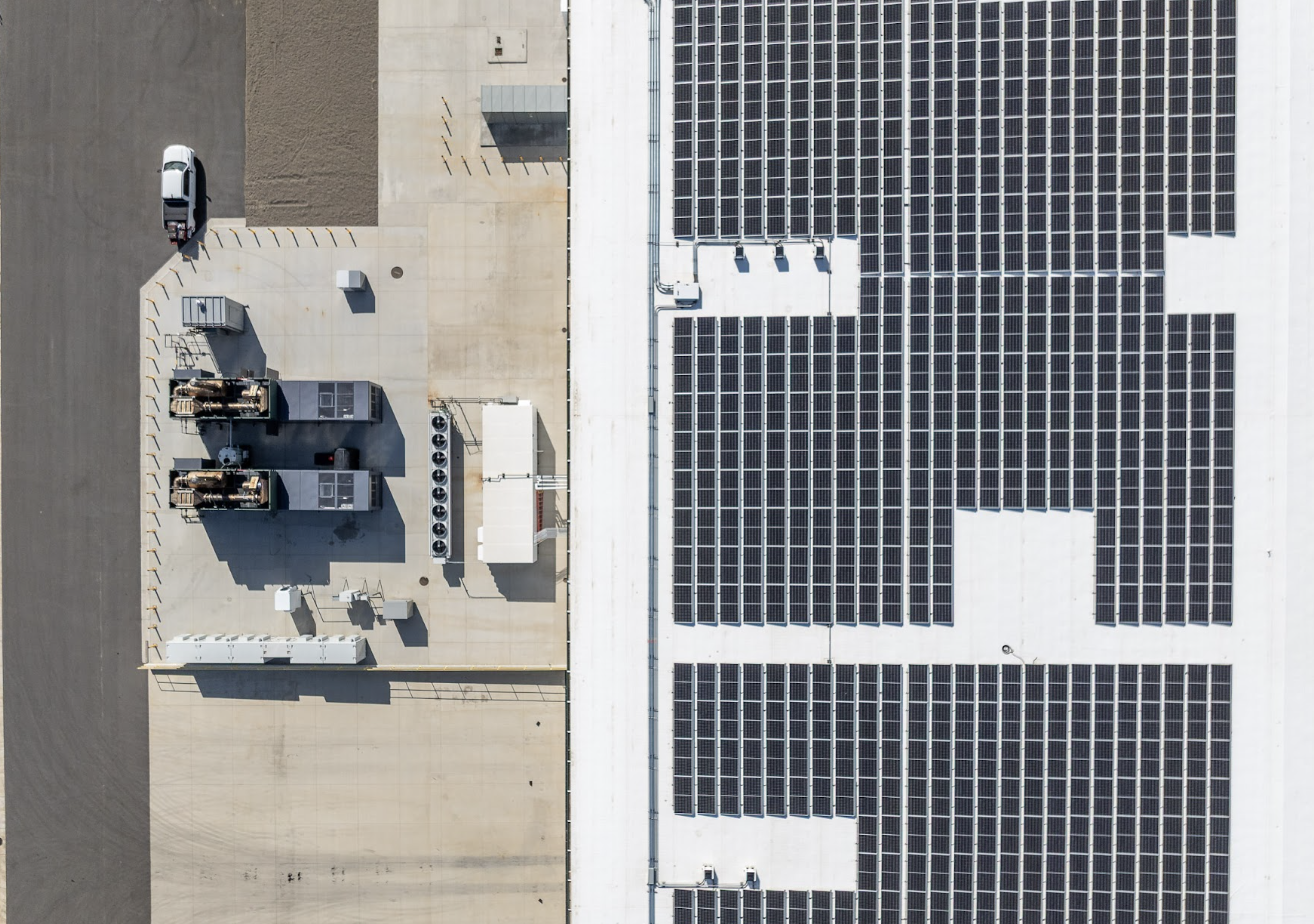
On-site generation lets a facility produce a portion of its own electricity at a fixed, predictable cost instead of paying retail rates that have been steadily rising upward year after year. Advanced microgrids with both solar and battery storage systems enable facilities to use every single kilowatt-hour generated on-site, reducing the need for energy from the grid and locking in savings for the life of the system.
This on-site energy generation is a key component of Scale's ability to provide optimized cost savings. Our customers can typically save 10-30% on their electricity bills, or even more in some cases; for example, the solar-plus-storage microgrid we're building for the Valley Transportation Authority (VTA) in San Jose, California will reduce their electricity costs by an estimated 48% as they electrify their fleet.
2. Manage your grid demand – and get paid for it
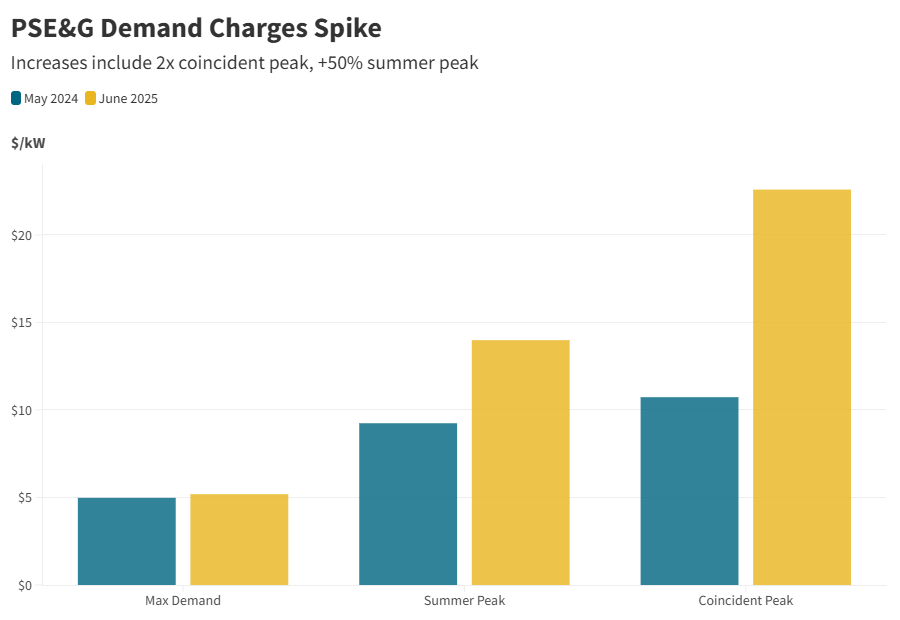
The drivers of big electric bills are changing: nowadays, it's not so much about how much power a facility uses, but how much it draws at once, and when. Demand and coincident peak charges are the fastest-growing portion of many commercial bills, and a battery-equipped microgrid tackles them automatically, discharging during peak-price windows and capping grid draw without requiring your operations to change at all. Our controls re-optimize dispatch continuously as time-of-use windows and tariffs shift, so the savings hold up – or increase – as rates evolve.
That same battery capacity can also become a revenue source, as a growing number of states pay commercial and industrial customers to make storage available to the grid during periods of high demand: Connecticut's Energy Storage Solutions program, for example, offers commercial participants performance-based payments for discharging during utility-called events, and similar programs exist across the country. For a facility that already has a battery on-site for savings and resilience, these programs offer an additional income stream to further reduce net energy costs.
3. Protect sensitive operations from routine power quality issues
Not every grid disruption is a full outage. Voltage sags, frequency fluctuations, and momentary utility blips can trip sensitive equipment, reset controllers, and interrupt automated processes even when the lights never go out – and as operations become more automated, a few seconds of trouble can cascade into hours of restarts and recalibration. An advanced microgrid with battery storage and intelligent controls can transition a facility to island mode nearly instantaneously, riding through the disturbance before it ever reaches the equipment that matters most.
This is a major component of what we mean by enhanced reliability: fast transitions measured in milliseconds, engineered and tested as a standard capability rather than a custom add-on. For companies ranging from manufacturers to food processing plants, the avoided scrap, restarts, and lost production time are often worth as much as outage protection itself.
4. Power through extended outages from severe weather
At the other end of the spectrum, when the grid goes down for hours or days at a time – during a hurricane, a wildfire-driven public safety power shutoff, or a winter storm – advanced microgrids also offer enhanced reliability by providing extended-duration backup protection with lower costs and lower emissions than traditional diesel backup generators. By combining solar, battery storage, and on-site generation, advanced microgrids can sustain a facility indefinitely, with controls automatically managing which resource to draw on.
And extended outages are no longer edge cases – especially in California where public safety power shutoff events are becoming more frequent and extending for longer periods of time. In January 2025, the longest wildfire-related power shutoff in Southern California Edison's history lasted 15 days, according to the CPUC. That's driving a growing number of water utilities and other essential service providers in California to adopt microgrids, and on the east coast our microgrid at Gallaudet University is designed to seamlessly carry the campus through similar kinds of prolonged disruptions.
5. Faster time-to-power for growth and electrification
Time-to-power (or speed-to-power) is the interval between deciding a facility needs new or expanded electrical capacity and actually energizing it. In 2026, utility interconnection is the bottleneck: the Lawrence Berkeley National Laboratory's Queued Up report shows national interconnection queues for new generation that are measured in thousands of gigawatts, with typical waits of five years or more, and those wait times are increasingly mirrored by interconnection queues for new large loads.
An on-site microgrid compresses that timeline to months, because generation gets built where the load is, on your schedule rather than the utility's. When Quality Custom Distribution needed to electrify its Southern California delivery fleet, a traditional utility service upgrade would have taken years; the microgrid we built, combining solar, battery storage, and backup generation, powered its new electric trucks and refrigerated warehouse without waiting on the utility at all. Amond World, a California cold storage facility, faced a two-to-three-year interconnection wait before we deployed a fully off-grid system instead.
6. A practical, measurable path to achieving sustainability goals
Large facilities are under growing pressure – from customers, investors, and, in some states, regulators – to reduce their carbon footprint. Advanced microgrids typically combine solar generation with battery storage, cutting reliance on grid electricity (and the emissions associated with it) while also creating the infrastructure needed to support future electrification, like EV charging or heat pumps.
Valley Transit Authority’s San Jose microgrid, for instance, will reduce its carbon emissions by an estimated 61%, while Gallaudet University's microgrid also feeds a community solar program that passes bill credits to hundreds of nearby households. For facilities working toward specific sustainability targets, a microgrid provides a concrete, measurable way to make progress.
7. No upfront capital required
Under a microgrid-as-a-service agreement, an energy provider designs, builds, owns, and operates the system, and the facility pays for the power, resilience, and savings it delivers, typically as a predictable fee. Several providers now offer this model, and it has become the default path for facilities that want on-site energy without a capital project.
Scale helped pioneer this category with our Microgrid Service Agreement (MSA), the structure behind projects across our portfolio, from cold storage facilities to fuel cell CHP plants. The MSA removes capital expenditure and operating risk from our customers' side of the ledger entirely, enabling them to save on energy expenses from day one while avoiding a capex hit.
From backup option to energy strategy
Without question, the risks of relying on the utility grid will last far beyond 2026. Rising demand, long interconnection queues, and rate pressure are structural rather than cyclical, and for large facilities that depend on reliable, affordable, and increasingly clean power, advanced microgrids are transforming the conversation around on-site energy assets: from contingency plan to core business strategy.
Want to see what a microgrid could do for your facility? Contact us and we'll model it against your actual load data.
Frequently asked questions
How long does it take to deploy a microgrid compared to utility interconnection?
A commercial-scale microgrid can typically be deployed in two years or less, while utility interconnection for large new loads now commonly takes five years or more in congested regions. The difference comes from building generation on-site, which avoids the transmission-level upgrades that drive utility timelines.
What is a microgrid service agreement (MSA)?
A microgrid service agreement is a contract under which a provider like Scale Microgrids designs, builds, owns, and operates an on-site energy system, and the customer pays a predictable fee for the power, resilience, and savings it delivers. The customer avoids upfront capital costs and operating risk; the provider is accountable for system performance over the life of the agreement.
Can a microgrid keep a facility running through a multi-day outage?
Yes. A microgrid that combines battery storage with on-site generation (and solar, where available) can operate in island mode indefinitely, as long as fuel supply is maintained. This is a key difference from standby generators alone, which are designed for shorter-duration backup and fail more often as outages stretch on.